
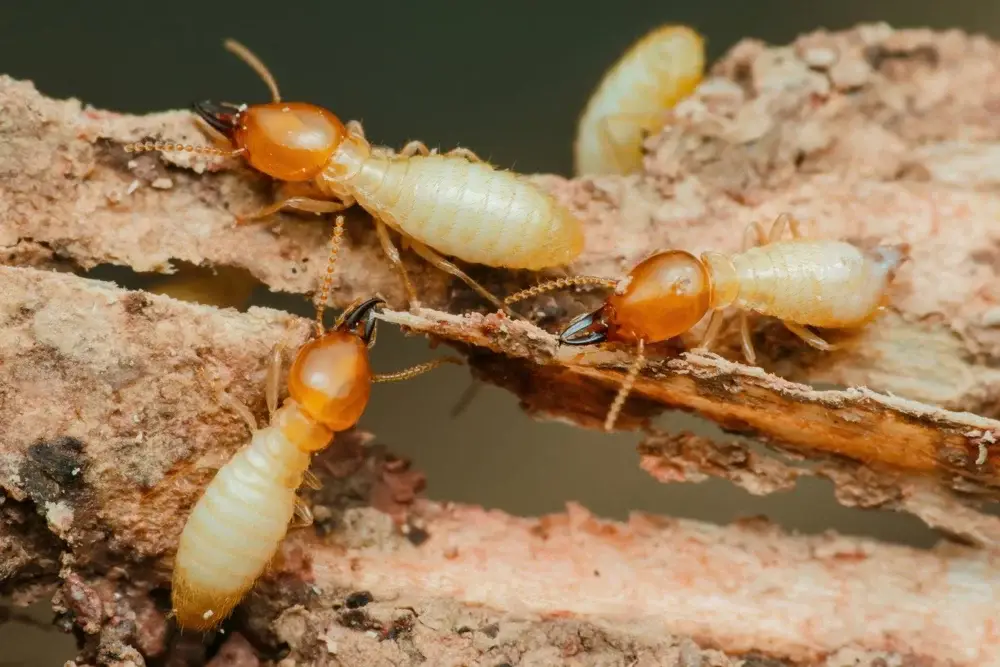
TL;DR: Wondering what do termites look like and how to spot them before they cause serious damage? This guide explains how to identify termites, tell them apart from bugs that look like termites, and recognize early warning signs of termites to protect your home.
Main points:
- Termites are ¼–½ inch long, soft-bodied insects with straight antennae and no pinched waist; swarmers have equal-length wings.
- Learn the difference between termites and flying ants based on antennae, wings, and body shape.
- Discover what termite damage looks like, including hollow wood, mud tubes, bubbling paint, and discarded wings.
- Find out what termite holes look like, including tiny pin-sized openings and wood-colored droppings (frass).
- Get prevention tips and learn when to call a local termite professional for an inspection.
If you’re a homeowner, spotting an unfamiliar insect around your property can be unsettling, especially if you’re worried it might be termites. One of the most common questions we hear is: What do termites look like? Knowing how to identify termites early can help you prevent serious structural damage and costly repairs.
In this guide, we’ll explain what a termite looks like, how to tell them apart from other insects, and the warning signs of an infestation, including what termite damage looks like inside your home.
What Do Termites Look Like?
When people ask, “What does a termite look like?” they’re often surprised by how small and subtle these pests are.
Termites typically:
- Measure about ¼ to ½ inch long
- Have soft, straight bodies
- Are usually white, cream-colored, or light brown
- Have straight antennae
- Lack the narrow “pinched” waist that ants have
Their appearance can vary depending on their role in the colony.
Worker Termites
Worker termites are the most common type homeowners see, though they usually stay hidden inside walls or wood. They are:
- Pale white or translucent
- Soft-bodied
- About ¼ inch long
- Wingless
Because they avoid light, you typically won’t see workers unless wood is disturbed.
Soldier Termites
Soldiers are similar in color to workers but have:
- Larger, darker heads
- Prominent jaws (mandibles)
- Slightly more armored appearance
They exist to protect the colony from threats.
Swarmers (Winged Termites)
Swarmers are often what homeowners notice first. These reproductive termites:
- Are darker brown or black
- Have two pairs of equal-length wings
- Are about ⅜ to ½ inch long including wings
If you see flying insects inside your home, especially in spring, you may be wondering whether they’re ants or termites. We’ll cover how to tell the difference next.
Types of Termites Commonly Found in Homes
Depending on your region, different termite species may be active. Understanding what termites look like in your local area can help you identify them faster.
Subterranean Termites
These are the most common and destructive types in the United States. They:
- Live underground
- Build mud tubes to reach food sources
- Are pale and soft-bodied
- Require moisture to survive
Because they travel through soil, they’re often discovered near foundations, crawl spaces, and basements.
Drywood Termites
Drywood termites:
- Live directly inside wooden structures
- Don’t require soil contact
- Tend to be slightly larger than subterranean workers
- Leave behind visible droppings (frass)
These termites are often found in attics, wooden beams, and furniture.
Dampwood Termites
As their name suggests, dampwood termites:
- Prefer moist, decaying wood
- Are typically larger than other species
- Are found in areas with high humidity or water damage
If you’ve had leaks or water intrusion, it’s especially important to know what termites look like so you can act quickly.
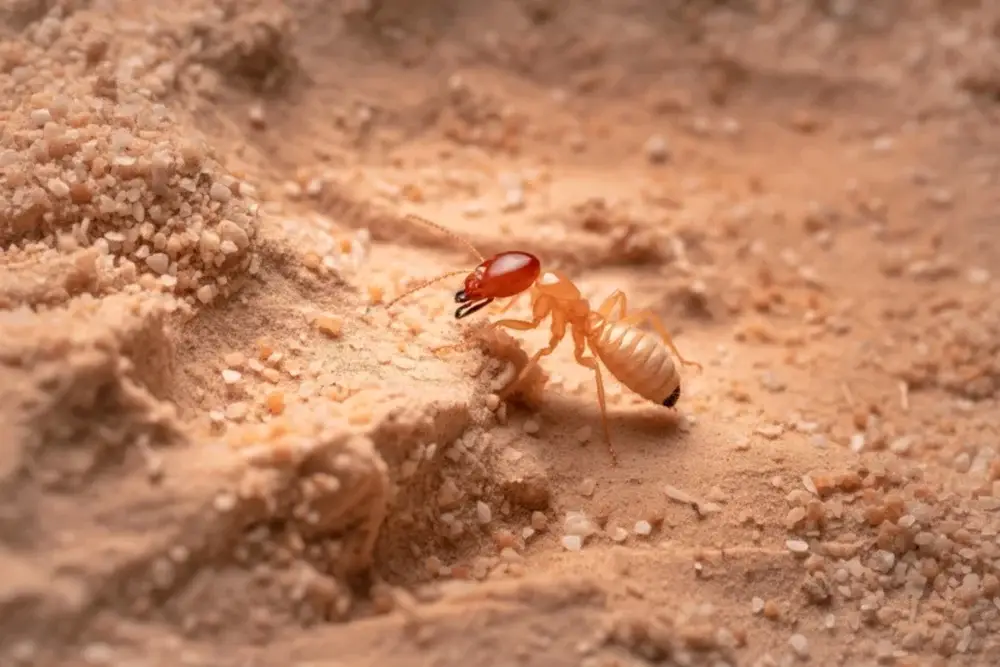
Termites vs. Ants: Common Bugs That Look Like Termites
One of the biggest sources of confusion for homeowners involves bugs that look like termites, especially flying ants.
Here’s how to tell the difference:
- Antennae
- Termites: Straight
- Flying Ants: Bent (elbowed)
- Waist
- Termites: Thick and uniform
- Flying Ants: Narrow and pinched
- Wings
- Termites: Equal length
- Flying Ants: Front wings longer than back wings
- Body Shape
- Termites: Straight-sided
- Flying Ants: Segmented
What Does Termite Damage Look Like?
Beyond identifying the insect itself, it’s critical to understand what does termite damage look like inside your home.
Termites consume wood from the inside out, meaning the damage is often hidden until it becomes severe.
Here are the most common signs:
1. Hollow-Sounding Wood
Tap on wooden beams, trim, or flooring. If it sounds hollow, termites may have eaten away the interior structure.
2. Mud Tubes Along Walls or Foundations
Subterranean termites build pencil-sized mud tubes to travel between their colony and your home. These tubes protect them from predators and dehydration.
3. Bubbling or Peeling Paint
Moisture from termite activity can cause paint to bubble or drywall to appear warped.
4. Discarded Wings
After swarmers mate, they shed their wings. You may find small piles of wings near windows, doors, or light fixtures.
5. Sagging Floors or Sticking Doors
Structural weakening can cause subtle shifts in your home’s framework.
What Do Termite Holes Look Like?
Homeowners often ask, what do termite holes look like?
Termite holes are usually:
- Tiny, round openings in drywall or wood
- About the size of a pinhead
- Sometimes accompanied by small piles of dust or pellets
With drywood termites, you may see frass, which looks like tiny wood-colored pellets or coarse sand beneath the holes. These are termite droppings pushed out of the tunnels.
Unlike carpenter ants, termites don’t leave behind large piles of sawdust. Their damage tends to look clean and layered inside the wood.
Early Warning Signs Every Homeowner Should Watch For
The earlier you identify termites, the easier and more affordable treatment typically is. Watch for:
- Soft or blistered wood
- Cracks in structural beams
- Swarms of flying insects indoors
- Unexplained wood damage
- Clicking sounds inside walls (from soldier termites)
If you’re unsure what you’re seeing, don’t wait. What looks minor today can become thousands of dollars in structural repairs later.
Why Local Termite Inspections Matter
Termite activity varies by climate and region. Warmer areas may experience longer swarm seasons, while humid environments increase moisture, a key factor in termite survival.
That’s why working with a local pest control professional is important. A local expert understands:
- Regional termite species
- Seasonal swarming patterns
- Soil conditions that increase risk
- Building styles common in the area
Scheduling routine inspections, especially if you live in an area prone to termite activity, can help prevent severe damage before it starts.
What to Do If You Spot Termites
If you believe you’ve identified what a termite looks like inside your home, take these steps:
- Don’t disturb the area, this can cause termites to retreat and spread.
- Document what you see with photos.
- Avoid DIY sprays, they rarely eliminate the colony.
- Contact a licensed termite professional for a thorough inspection.
Professional treatments may include baiting systems, liquid barriers, or localized treatments depending on the infestation type and severity.
Protecting Your Home from Future Termite Problems
Prevention is always better than repair. Here are simple steps to reduce risk:
- Eliminate wood-to-soil contact
- Repair leaks promptly
- Keep gutters clean and redirect water away from the foundation
- Store firewood away from the house
- Schedule annual termite inspections
Termites are small, but the damage they cause can be massive. Knowing the answer to your questions can help you act before a minor issue becomes a major structural repair.
If you suspect termite activity in your home, don’t wait. A professional inspection can give you peace of mind and protect your property for years to come.
Schedule a free consultation today.