
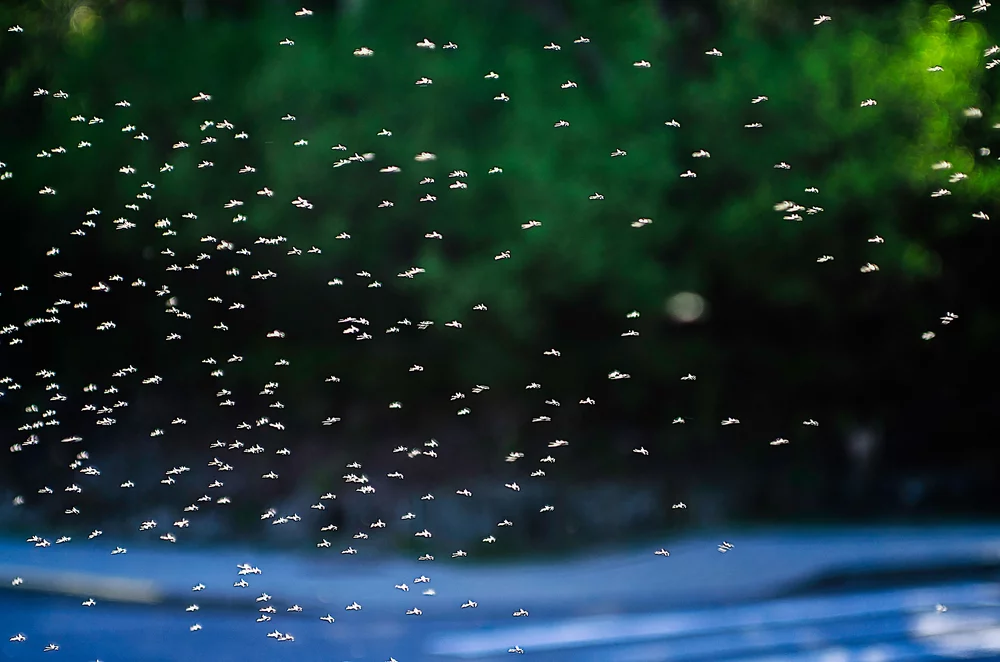
TL;DR: If you’re wondering how to get rid of gnats, the key is identifying the species, eliminating their breeding source, and using targeted treatments to stop the life cycle. This guide walks you through practical steps to remove gnats quickly and prevent them from coming back.
Main points:
- Identify the type of gnat (fruit flies, fungus gnats, drain flies, and more) by where they gather.
- Eliminate breeding sources like overripe produce, soggy soil, clogged drains, and hidden moisture.
- Use DIY traps such as apple cider vinegar, sticky cards, or hydrogen peroxide soil drenches.
- Deep clean weekly and controling moisture.
- Call a professional if gnats persist or signal a hidden plumbing or moisture issue.
Gnats invade fast. They hover around your kitchen. They swarm your plants. They make your home feel dirty.
You can get rid of them. You can also stop them from coming back. You just need the right plan.
Here’s how to do it.
Step 1. Identify the Type of Gnat
Not all gnats act the same. In the United States, gnats are mostly a nuisance pest. While some biting species can transmit diseases globally, gnat-borne illnesses are rare domestically. According to the CDC, midges can spread viruses like Oropouche.
You need to know what you’re dealing with before you get rid of gnats. Identifying the exact type of gnat makes treatment much easier and faster.
The source always tells the story.
- Fruit flies gather near ripened fruit, trash cans, and sticky spills. They love sugar and fermentation.
- Fungus gnats hover around houseplants. You’ll see them near soil. Their larvae live in damp dirt.
- Drain flies stay near sinks and drains. They breed in slime inside pipes.
- Phorid flies gather around decaying organic matter, garbage, or hidden moisture. They often run quickly across surfaces instead of flying. They breed in rotting material and plumbing issues.
- Shore flies hover near overwatered plants or greenhouse areas. You’ll see them around very wet soil. Their larvae feed on algae and organic buildup.
- Eye gnats swarm around your face outdoors. They’re attracted to moisture like sweat and eye secretions. They don’t bite, but they’re persistent and irritating.
- Biting midges (no-see-ums) gather near water and humid outdoor areas. You’ll notice them most at dawn or dusk. They bite and can leave itchy welts.
- Black flies (buffalo gnats) stay near rivers and streams. You’ll find them outdoors in warmer months. They bite and can cause painful swelling.
- Cluster flies collect near windows and light sources indoors. You’ll often see them in cooler months. They develop in soil and enter homes to overwinter.
- Gall midges gather around plants, trees, and garden beds. You’ll see them hovering near leaves and stems. Their larvae live inside plant tissue and can cause small swellings or distorted growth on plants.
Watch where the gnats gather. That tells you the source. Correct identification saves time. If you treat the wrong area, the gnats will stay.
Step 2. Eliminate the Source First
This step matters most. If you skip it, the gnats will return. Gnats lay eggs near food and moisture. Remove those conditions. You break the life cycle. Check for overripe produce, soggy soil, clogged drains, or hidden moisture problems. Once you remove their breeding ground, most populations shrink quickly and become far more manageable.
How to Get Rid of Gnats in the Kitchen:
- Throw away overripe fruit.
- Store produce in the fridge.
- Wipe up spills right away.
- Take out the trash daily.
- Rinse recycling before storing it.
Even a small spill can attract dozens of gnats.
How to Get Rid of Gnats Outside/In Drains:
- Scrub inside drains with a long brush.
- Remove slime and buildup.
- Flush with boiling water.
- Use baking soda and vinegar to loosen debris.
Do not rely only on liquid drain cleaners. They often miss the organic buildup where gnats breed.
How to Get Rid of Gnats in Plants:
- Let the top inch of soil dry before watering.
- Empty saucers under pots.
- Remove dead leaves.
- Replace heavily infested soil if needed.
Fungus gnats thrive in wet soil. Dry conditions kill larvae.
How to Get Rid of Gnats in the House:
- Fix leaking pipes.
- Check under sinks.
- Remove standing water.
- Improve airflow in humid rooms.
Moisture drives population growth. Control it with any of the methods above.
Step 3. Use DIY Traps to Kill Adult Gnats
Once you remove the source, kill the remaining adults. This speeds up results to get rid of gnats in your house quickly. Adult gnats live about a week, so stop them from laying more eggs.
Apple Cider Vinegar Trap
- Fill a small bowl with apple cider vinegar.
- Add a few drops of dish soap.
- Leave it uncovered.
The scent attracts gnats. The soap breaks surface tension. They sink and drown.
Dish Soap Spray
- Mix water and a few drops of dish soap.
- Spray directly on gnats.
This works on contact. It works best for small swarms.
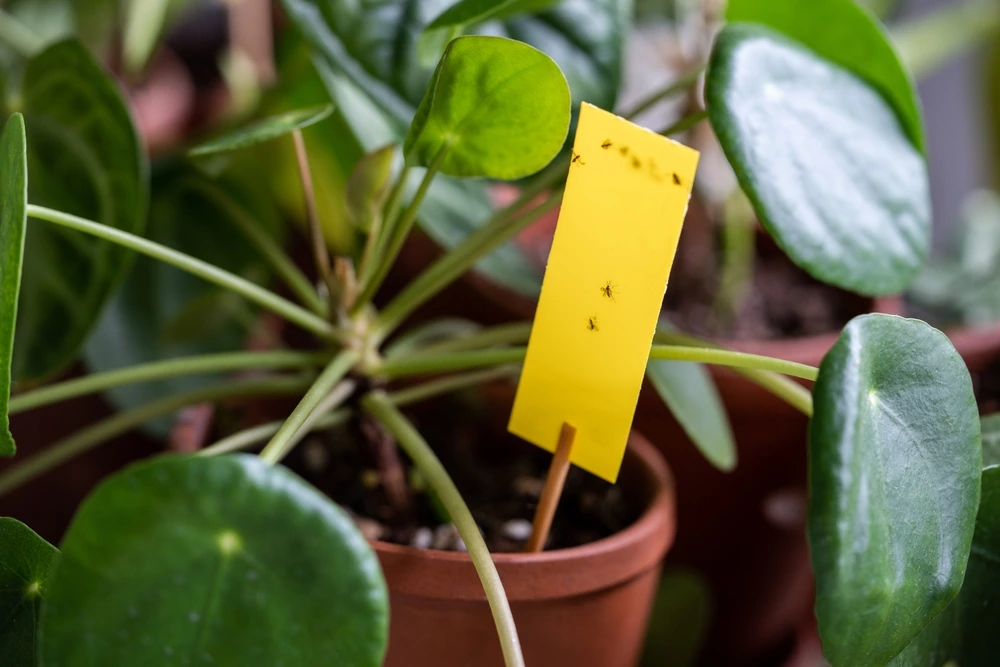
Sticky Traps
Place yellow sticky cards near plants. Fungus gnats stick to them.
Sticky traps do not solve the root issue. But they reduce the adult population fast.
Hydrogen Peroxide Soil Drench (Gets rid of Fungus Gnats)
- Mix one part 3% hydrogen peroxide with four parts water.
- Pour it into the soil.
It kills fungus gnat larvae on contact. You may hear fizzing. That’s normal.
Always treat the source and use traps together. One without the other fails.
Step 4. Deep Clean to Prevent Return
Gnats return when habits slip. Create a routine.
Clean Weekly:
- Wipe counters with disinfectant.
- Mop sticky floors.
- Clean trash cans inside and out.
- Scrub sink drains.
Do not forget hidden areas. Check under appliances. Food debris collects there.
Store Food Properly:
- Use airtight containers.
- Refrigerate ripe fruit.
- Seal dry goods.
Open packaging invites pests.
Manage Plant Care:
- Avoid overwatering.
- Use well-draining soil.
- Add a thin layer of sand on top of soil to deter egg-laying.
Healthy plant care prevents fungus gnats long-term.
Control Moisture:
- Use a dehumidifier in damp spaces.
- Run bathroom fans.
- Open windows when the weather allows.
Gnats need moisture to breed. Remove it. Small changes create long-term protection.
Step 5. Know When to Call a Professional
Most gnat problems resolve with consistent effort. Some do not.
Call a professional if:
- Gnats return within days.
- You see heavy swarms daily.
- You suspect a hidden leak.
- Drains smell foul despite cleaning.
- They spread across rooms.
Persistent gnats often signal a hidden moisture issue. A cracked pipe. A clogged drain line. Rotting organic material inside walls.
Professionals use targeted treatments. They also inspect for structural issues. That saves time and frustration. Do not ignore increasing gnat populations. They rarely fix themselves.
Want a gnat-free home? Schedule a free consultation today!